Sweater Gauge Guide: 15 Checks for 3GG to 12GG
Understand gauge terminology and coordinate yarn, structure, fit and sample approvals for your knitwear collection.
Table of contents
Sweater gauge guide: understand the number before approving the knit
A sweater gauge guide helps buyers interpret numbers such as 3GG, 5GG, 7GG and 12GG without treating them as a complete product specification. In a common V-bed machine context, gauge describes needle spacing through the number of needles per inch. Higher numbers mean more closely spaced needles in that convention. The finished sweater still depends on the yarn, structure, knitting settings, finishing and pattern.
That distinction matters when a brand requests a chunky winter pullover, a lighter layering sweater or a patterned cardigan. A gauge number can help frame the development discussion, but it cannot independently establish weight, warmth, softness, quality or price. A useful enquiry connects the number to a drawing, identified yarn, approved swatch and representative garment sample.
This article from M&A Composite Ltd supports the sweater product category with practical sourcing questions. It explains how to compare proposals and control sample approvals rather than prescribing machine settings. The knitting specialist should confirm the suitable yarn and machine combination for the proposed design and production route.
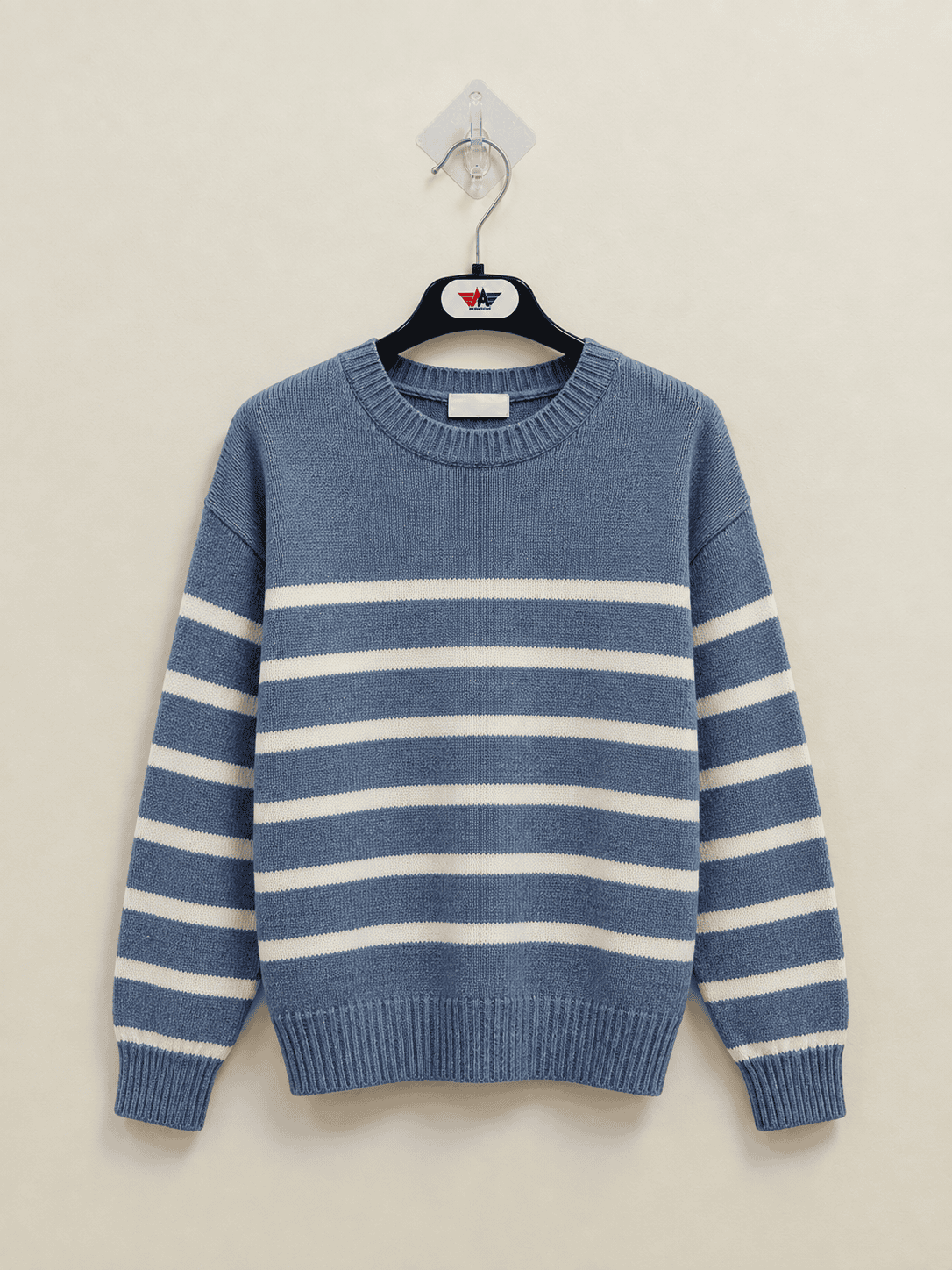
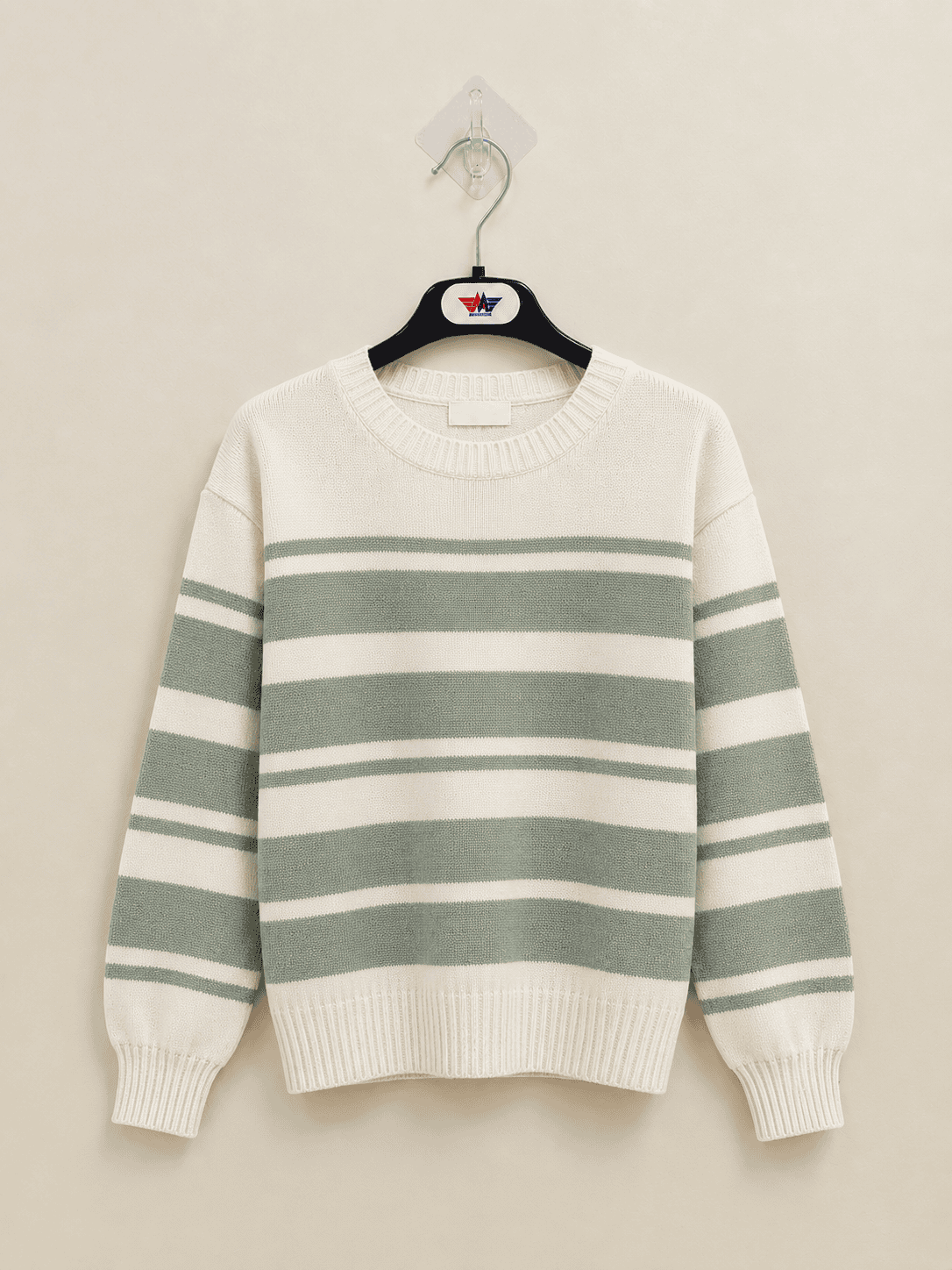
Images in this guide show visible sweater designs from the website’s media library. They do not verify machine gauge, yarn composition or tested performance. Comparison tables and approval bars are illustrative planning aids, not laboratory results, current factory capacity, published pricing or live order progress. Request a product-specific written proposal before making purchasing decisions.
1. Confirm which gauge convention the supplier is using
The same word can appear in machine descriptions, hand-knitting patterns and finished-fabric measurements. Ask what the supplier means by gauge in the proposal. For a machine, confirm the machine type and the measurement convention. For a finished swatch, ask whether the number refers to stitches or rows over a defined distance after a stated finishing process. These descriptions should not be used interchangeably.
Woolmark’s Introduction to Knitwear training manual distinguishes V-bed gauge expressed per inch from a straight-bar convention expressed per one and a half inches. This is a useful reminder to confirm the basis before comparing numbers. A label such as 12 gauge without context may leave an important technical question unresolved.
Separate the machine reference from the finished result in your technical file. Record the proposed machine gauge in one field and the approved swatch reference in another. If finished stitch density is part of the specification, include its measurement method and state whether it is assessed before or after finishing. Let the technical team establish suitable evaluation conditions.
A clear naming system avoids arguments later. A buyer may believe a sample has changed because the visible stitches differ, while the supplier may be referring to an unchanged machine gauge. Both observations can be relevant, but they describe different things. Ask the team to explain the relationship using the actual swatches rather than assuming a shared interpretation of a short abbreviation.
2. Read 3GG, 5GG, 7GG and 12GG as starting points
In the common V-bed convention, 3GG, 5GG, 7GG and 12GG identify different needle spacings. They are useful terms for an initial discussion about the proposed knitting route. They are not ready-made recipes. A brand still needs to define the surface, drape, silhouette and performance it wants and review whether the selected construction achieves those goals.
Buyers often associate lower numbers with a more visibly chunky direction and higher numbers with finer-looking knitwear. Treat that as an orientation for discussion rather than a universal guarantee. Yarn choice, the number of ends used, stitch structure and finishing can alter the appearance substantially. Two sweaters carrying the same gauge description can look and feel different in a finished collection.
Do not ask a supplier to change only the gauge while promising that every other characteristic will stay identical. A different machine and yarn combination can require redevelopment of the structure, pattern and finishing. Request a new identified swatch and ask what changes are proposed. Compare the resulting product against the intended design instead of judging it solely by the number.
When a brand already has a physical reference, use it to communicate the desired appearance and feel. The supplier can assess an appropriate route without pretending the gauge is visible with certainty from a distant photograph. Keep the reference garment, technical proposal and approved sample connected so the development goal remains clear even if the original proposed machine setting changes.
3. Define the sweater's purpose before selecting the knit
Start with the role of the sweater in the range. A garment intended to sit under a tailored jacket may need a different bulk and silhouette from a relaxed outer-layer pullover. A decorative seasonal style may prioritise motif appearance, while a repeat basic may prioritise a consistent fit and easy coordination with other products. Explain the use before focusing on a gauge number.
Consider where and how the product will be worn. A climate label alone does not define the requirement because indoor settings, layering and individual preferences differ. Describe the intended outfit and the desired feel. If a thermal or other performance claim is central to the product, identify the evidence needed instead of assuming gauge establishes that claim.
Provide drawings that show the neckline, shoulder shape, sleeves, body length and rib proportions. An oversized sweater with dropped shoulders is a different development brief from a fitted cardigan, even if both use the same proposed machine gauge. Include front and back views and identify which details are essential to the design and which can be discussed.
Write a short priority statement for the sampling team. For example, the brand may want a clean surface, a moderate drape and a stable neckline, or a textured appearance with a deliberately generous silhouette. These priorities help the supplier propose a coordinated yarn and structure. They also provide a more useful approval basis than an instruction to make a premium sweater.
4. Request a complete yarn specification
Yarn composition is only one part of the material description. Ask for the count system, count, ply information where applicable, colour reference, supplier or article reference and relevant finish. If the specification uses an unfamiliar notation, request an explanation rather than comparing the numbers directly with a different count system. A clear yarn record helps avoid substitutions that appear similar but behave differently.
The knitting specialist should assess the relationship between the proposed yarn and machine. Do not use a generic online table as authority to approve every yarn with the same count. Construction and process conditions matter, and a development trial may reveal limitations that a short description does not show. Ask the supplier to identify the actual yarn used in each submitted swatch.
Review the material physically when possible. Assess the desired handle, visual character and compatibility with the design, then decide what supporting performance evidence is needed. A soft initial feel does not prove low pilling, colourfastness or after-care stability. Those questions require suitable evaluations tied to the selected material and product rather than a general description of the fibre.
Record approved alternatives separately. If a yarn becomes unavailable or its commercial terms change, the team should know whether another option has been evaluated. Do not let the word equivalent replace a comparison of composition, appearance and relevant performance. A substitution should have its own reference and a clear decision about which sample approvals need to be repeated.
5. Keep gauge, garment weight and GSM distinct
Gauge is not a garment weight measurement. A finished sweater’s mass depends on its size, yarn, structure, dimensions, components and finishing. A heavier sample is not automatically better quality, and two sweaters on the same gauge can have different weights. If weight is commercially important, state how it should be measured and which size and condition the reference represents.
GSM expresses mass per unit area and can be relevant to a fabric or defined knitted specimen. It should not be used casually as a substitute for the complete sweater’s weight or its machine gauge. Ask what article was measured, under what conditions and how the result will be used. The technical team should define a meaningful basis for comparison.
Avoid converting a gauge number directly into a promised GSM, warmth level or retail season. Such a conversion can conceal differences in construction and material. Request an identified swatch and a finished sample, then review the characteristics that actually matter. If the brief changes from a compact surface to a more open structure, update the relevant expectations rather than relying on the earlier number.
Our GSM explanation for apparel buyers provides related terminology, but a sweater project needs its own material and construction record. Keep the measurements clearly labelled in the technical file. This makes it easier to compare quotations and prevents a commercial discussion about weight from being mistaken for an approval of machine specification or product quality.
6. Compare plain, rib and textured structures on swatches
A gauge proposal becomes more useful when paired with a specified structure. A plain surface, rib effect, cable detail or other texture can change the visual balance and movement of a sweater. Provide close-up references where needed, but ask the supplier to identify the proposed construction and confirm that it is suitable for the actual yarn and machine route.
Review swatches after the intended development finishing rather than assuming an unfinished piece represents the final product. Ask the team to explain which treatment has been applied and whether the same route is proposed for the garment. Keep a swatch reference with the date and material details. A loose sample without identification becomes difficult to use after several options have been reviewed.
Compare the structure in the context of the whole design. A strong texture can influence the proportions of a cropped body, a narrow sleeve or a large neckline. A surface that looks attractive in a small square may need another review on a representative garment. Treat the swatch as a material approval stage, not as a complete substitute for fit development.
If a structure is revised for feasibility or cost, record the visual difference explicitly. Ask what has changed and review it against the design priorities. Do not approve an alternative only because it has the same gauge label. The buyer is ultimately approving a particular garment appearance and function, supported by a controlled construction reference that production can follow.
7. Develop stripe and motif layouts with a clear scale
Stripes and motifs need their own design instructions. Supply the intended repeat, colour placement, scale and position on the garment. Show how the pattern should relate to the neckline, armholes, hem and sleeve. A photograph can communicate direction, but a controlled artwork or layout reference helps the knitting team understand which alignments matter to the brand.
Gauge and yarn choices can influence how a proposed detail can be represented, so ask for a development submission rather than assuming a graphic will transfer unchanged. Review the actual knitted result at the intended scale. A small motif, thin line or closely spaced colour detail may look different from its digital preview. Discuss acceptable interpretation before approving the complete garment.
Consider the size range when locating pattern details. Keeping a motif at a fixed distance from the neckline may create a different balance from scaling the design with the body. Neither rule is universal. Define the desired approach and review representative sizes. For stripes, specify the alignment priorities at seams and sleeves and ask the supplier to explain any practical limitations.
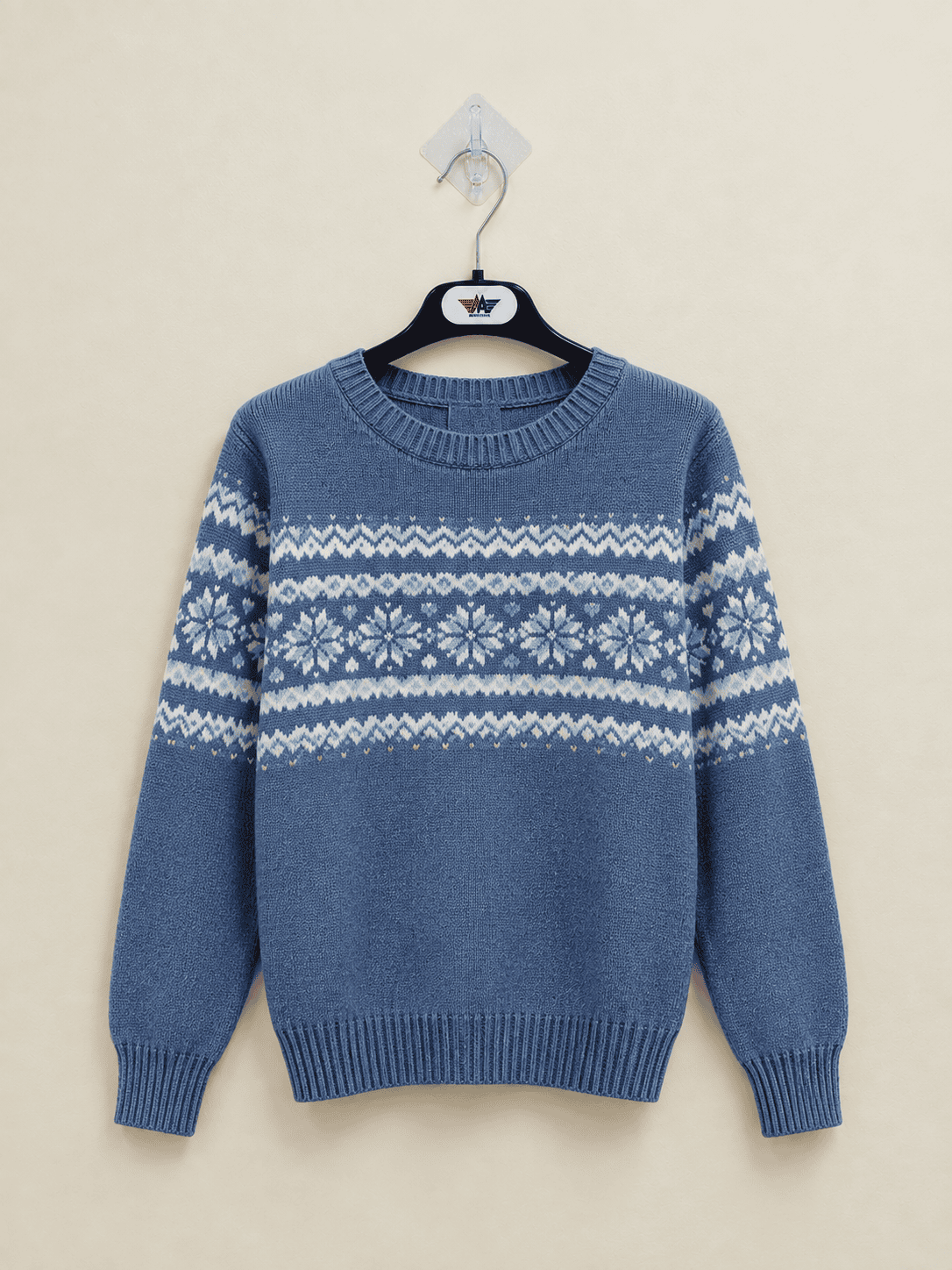
The blue patterned sweater illustrated in this guide is a visible motif reference only. Its photograph does not verify the machine gauge or knitting technique. Use such examples to discuss layout and proportion, then request an order-specific swatch or sample. Keep the approved artwork revision linked to the approved yarn colours so later changes do not combine incompatible references.
8. Evaluate drape, coverage and surface handle
The desired feel of a sweater should be described through a combination of references and observations. Words such as soft, compact, airy or substantial can begin a conversation, but different teams may interpret them differently. Review identified swatches and a garment sample, then record what the brand is approving. Avoid assuming a higher gauge automatically produces a softer or more luxurious product.
Check drape in the intended silhouette. A relaxed body should hang as designed without relying on a styled photograph to hide an imbalance. Review the garment on an appropriate fit reference and consider movement. A hanging sample can reveal some features, but it cannot establish how a sleeve, neckline or hem behaves when worn with the intended layers.
Assess coverage in representative colours and under agreed viewing conditions. A pale or open-looking construction may need a different wearing arrangement from a darker or more compact option. If opacity is a specific requirement, define the assessment with suitable technical input. Do not transfer a coverage decision from one colour and construction to every version of the range without review.
Separate subjective preferences from formal performance claims. A buyer may prefer the handle of one swatch, while durability or thermal behaviour remains untested. Record those decisions in different fields. This allows the team to select a preferred design direction while still identifying the evidence required before making a broader claim or authorising bulk production.
9. Control neckline, cuff and hem proportions
Ribbed openings and edges contribute strongly to a sweater’s appearance. Specify neck opening, neckband height, cuff length and hem depth with clear measuring points. Review their relationship to the body and sleeve rather than treating them as generic finishing details. A narrow neckband and a broad ribbed collar can give the same body a very different retail character.
Ask the technical team how the proposed edge construction relates to the main body. Review the assembled sample for unwanted gathering, flare, twisting or excessive restriction where these issues are observed. Record the location and effect rather than prescribing a cause from a photograph. Material, pattern and making details may need to be considered together when proposing a correction.
Check the intended movement and access. A neckline should suit the design and wearer, and cuffs should behave appropriately for the planned sleeve. If stretch, recovery or durability is a formal requirement, agree suitable evaluation rather than relying only on a quick manual pull. A representative assembled sample provides a better starting point than separate body and rib swatches alone.
When a cuff or neckband changes, assess whether it affects the rest of the garment. A revision may change total sleeve length, neck depth or body appearance. Update the relevant measurements and sample comments in one controlled revision. This helps prevent a successful local adjustment from creating a new mismatch that is noticed only after the bulk order has been made.
10. Specify fit and grade the complete size range
Sweater fit depends on the pattern and material together. Define the intended ease, shoulder position, body length and sleeve shape. An oversized sweater is not simply a standard size made larger in every direction. Provide a drawing and fit reference so the sample team understands the intended relationship between the garment and wearer before selecting detailed measurements.
Use a measurement chart with defined points, units and tolerances. Clarify how the garment should be placed and handled for the relevant checks. Do not stretch a sample into the desired dimensions during review. The technical team should establish an appropriate measurement method, particularly for textured or elastic areas, so different reviewers can assess the same sample consistently.
Review grading deliberately. Necklines, shoulders, motifs and rib proportions may need attention across size extremes. A sample size that looks balanced does not prove every size will maintain the same intended design relationship. Ask for the size-set evidence required for your project and identify who will approve it before bulk production is released.
Write fit comments as specific observations and requested changes. State the measuring point, the current revision and the desired adjustment. If the issue is visual rather than numerical, explain where it appears during wear. Our garment sampling guide provides a framework for making those comments traceable and keeping a new sample connected to the decision it is intended to resolve.
11. Agree finishing and after-care evaluation
The development reference should identify the finishing route used for the approved sample. Ask what is proposed, which operations are involved and whether the same route will apply to production. Do not assume that two samples with the same yarn and gauge have received equivalent finishing. A change in the route may require another review of dimensions, appearance and handle.
Prepare care requirements alongside product development. Tell the technical team what instructions the brand intends to use and ask what evaluation is needed for the complete garment. Main yarn, decorative details, buttons, labels and other components should be considered together. A material-level result may not answer every question about the finished sweater as customers will receive it.
Keep original measurements separate from after-care changes. A sample that starts outside specification is not automatically acceptable because its measured change is small. Record the actual before and after values under the agreed conditions. Our garment shrinkage test guide explains the calculation and why a single overall percentage can hide important differences between dimensions.
Do not promise zero shrinkage or permanent shape retention without appropriate evidence and a clearly defined basis. Ask a competent testing provider to confirm suitable methods, conditions and reporting. Keep the resulting report tied to the actual sample and material references. If the design or finishing changes, decide explicitly whether earlier evidence still supports the intended approval decision.
12. Build a product-specific quality review
A sweater quality plan should translate the approved design into practical checks. Include relevant measurements, appearance, construction, components and packaging, then agree how findings will be assessed. Gauge can be part of the technical record, but it is not a complete quality score. A garment can use the requested machine reference and still fail other agreed product requirements.
Review visible issues such as holes, uneven pattern placement, missed construction details or inconsistent edges where applicable. The exact defect definitions and acceptance arrangements should be agreed for the order. Avoid saying every piece is guaranteed flawless because one development sample looks neat. Production consistency requires a plan for monitoring, correction and final review that fits the actual project.
Discuss performance questions separately. Pilling, colourfastness, dimensional change and other properties need suitable evaluation when they are part of the requirement. A photograph or soft handle does not establish a result. Ask which reports are required, which sample they cover and how changes in yarn or processing will affect the evidence needed for release.
Keep corrective actions specific. If a finding appears, identify the affected reference or quantity, the proposed correction and the next evidence required. A vague assurance that quality will be improved is difficult to verify. A documented correction and re-evaluation give the buyer and supplier a clearer basis for deciding whether the product is ready for the next stage.
13. Compare quotations without treating gauge as the price
The price of a sweater reflects more than a gauge number. A quotation needs an identified design, material, structure, size range, quantity breakdown, finishing and packaging scope. Ask the supplier to state the commercial basis and open assumptions. Two offers cannot be compared fairly if one includes custom yarn colours and another assumes available material with a different construction.
Discuss development charges separately where appropriate. Swatches, programming or pattern work, samples, specialist testing and courier services may be handled differently from bulk unit pricing. Ask what revisions are included and how changes will be authorised. A clear scope helps the brand understand the consequences of switching yarn, structure or motif after an initial proposal has been prepared.
Minimum quantities may arise from yarn, colour, components or the garment programme. Request the actual breakdown for your proposed assortment. More colours or small style groups can create a different sourcing problem from one larger repeat style. Do not treat an illustrative quantity in a guide or an old marketing statement as a current supplier commitment.
Record quotation validity, currency, delivery basis and exclusions. Ask what needs approval before the schedule and cost can be confirmed. Our custom sweater development article provides broader order-preparation questions. The most useful proposal connects cost to an understandable product specification instead of relying on a gauge label to imply all other details.
14. Use a gauge comparison and approval worksheet
A comparison worksheet should show the design objective and the evidence behind each option. Start with the desired silhouette, handle and surface. Record the proposed machine context, yarn reference, structure and finishing route, then evaluate an identified swatch. This makes the comparison practical without pretending that one gauge is best for every brand or sweater category.
If two submissions differ, ask which variables changed. A different yarn, a different structure and a different finishing route can make it hard to attribute the result to gauge alone. You do not always need a laboratory-style experiment for a design choice, but you do need to understand what product is being approved and whether the supplier can reproduce it.
The tables below are planning tools, not machine-setting instructions or supplier performance comparisons. They intentionally avoid guaranteed weight, warmth, yarn-count or price conversions. The knitting specialist should confirm compatibility and feasibility through the actual development route. Use the finished swatch and garment to judge whether the proposal meets your brief rather than assuming the number completes the decision.
The progress bars illustrate a possible approval sequence only. They are not a live order tracker, a production completion report or a promised schedule. For a real order, record dates, owners and the evidence needed to close each open decision. Keep the final approved technical file, material references and sample available to the teams responsible for production and inspection.
| Proposed reference | Needles per inch in this convention | Record alongside it | Do not infer |
|---|---|---|---|
| 3GG | 3 | Yarn, structure and finished swatch | Guaranteed weight or warmth |
| 5GG | 5 | Yarn, structure and finished swatch | A fixed yarn composition |
| 7GG | 7 | Yarn, structure and finished swatch | A universal quality level |
| 12GG | 12 | Yarn, structure and finished swatch | A fixed price or softness |
| Decision | Evidence to retain | Question to resolve |
|---|---|---|
| Machine context | Proposed gauge and convention | Are both parties using the same definition? |
| Material | Identified yarn and approved colours | Is the production material the evaluated one? |
| Construction | Finished swatch and structure reference | Does the surface meet the brief? |
| Fit | Measurement chart and sample revision | Are proportions and grading approved? |
| Care and quality | Agreed evaluation scope and findings | Are requirements supported by evidence? |
| Commercial release | Current proposal and packing instructions | Are exclusions and open approvals resolved? |
Illustrative knitwear approval roadmap
Sequence illustration only. These percentages do not show any live order or production status.
15. Prepare a sweater enquiry with M&A Composite Ltd
Send the design direction with front and back drawings, reference photographs, intended fit, size range and proposed quantities. If you already have a preferred gauge, include it with the machine context if known. Explain whether that number is essential or simply an initial suggestion based on a reference. The team can then discuss a suitable product-specific development route.
Provide yarn information where available and identify what still needs sourcing. Ask for clearly referenced swatches and a description of the proposed structure and finishing. Confirm which operations would be used and who controls the approvals. Do not assume that every category image establishes every machine capability or that a sweater’s composition can be identified reliably from its appearance.
Review the sweater manufacturing category and the company profile as starting points. Request current information relevant to your order, including material availability, sample stages, quantities, commercial terms and quality requirements. Obtain supporting documents for any certification or performance claim that matters to your purchasing decision.
Use the M&A Composite Ltd contact page to share the brief. A useful sweater gauge guide should lead to a better conversation, not an automatic choice of the highest or lowest number. The goal is an evaluated yarn and construction combination, an approved fit sample and a documented reference that matches the collection your brand intends to produce.
Frequently asked questions
What does sweater gauge mean?
In a common V-bed machine context, gauge refers to the number of needles per inch. Confirm the machine type and convention because other contexts use different bases. Finished stitch density is a separate description that also needs a defined measurement condition and method.
What is the difference between 3GG, 5GG, 7GG and 12GG?
In the same common V-bed convention, the numbers indicate different needle spacings, with higher numbers representing more closely spaced needles. They do not independently determine finished weight, warmth, softness, quality or price. Review the actual yarn, structure, finishing, swatch and garment sample.
Is a higher gauge sweater always better quality?
No. Quality means meeting the agreed requirements for the intended product. A gauge number cannot establish workmanship, material performance, fit or durability by itself. Evaluate the complete specification, representative samples and relevant evidence instead of ranking products solely by a higher number.
Can I identify sweater gauge from a photograph?
A photograph can suggest a visual direction but does not reliably verify the machine specification. Ask for the technical record and an identified sample. Images in this guide illustrate design features only and do not establish gauge, yarn composition or tested performance.
Is sweater gauge the same as GSM?
No. Gauge describes a knitting reference in its stated context; GSM describes mass per unit area of a defined specimen. Finished garment weight is another measurement. Keep these fields separate and agree a meaningful measurement basis for any weight requirement.
Which gauge is best for a chunky sweater?
Begin with the desired look, handle, fit and intended use, then ask the knitting specialist to propose a suitable yarn and machine combination. Lower numbers are commonly discussed for chunkier directions, but appearance is not guaranteed by the number. Approve identified swatches and a garment sample.
Does one gauge require one fixed yarn count?
No universal yarn recipe is provided here. The suitable combination depends on the machine, construction, yarn and development conditions. Record the actual proposed yarn specification and let the technical team confirm compatibility through appropriate trials rather than relying on an isolated count number.
Should sweater samples be reviewed after finishing?
Review a representative sample using the proposed development finishing route, with the process identified. Assess dimensions, appearance and handle, then agree suitable after-care evaluations where required. A change in yarn, components or finishing may mean earlier approvals need another review.
What affects the MOQ for custom sweaters?
Yarn sourcing, colour groups, design complexity, component requirements and garment quantities can introduce separate constraints. Request a current order-specific breakdown. The illustrative tools in this article are not published M&A Composite Ltd MOQ commitments, prices or delivery promises.
How do I request a sweater development proposal?
Share drawings, references, fit requirements, size range, yarn direction, quantities and target schedule through the M&A Composite Ltd contact page. Include any preferred gauge with its context and ask for a written proposal covering swatches, samples, materials, commercial scope and approval responsibilities.
Discuss your next sweater collection
Send drawings, yarn direction, fit requirements and quantities to discuss a product-specific development proposal.
Contact M&A Composite Ltd